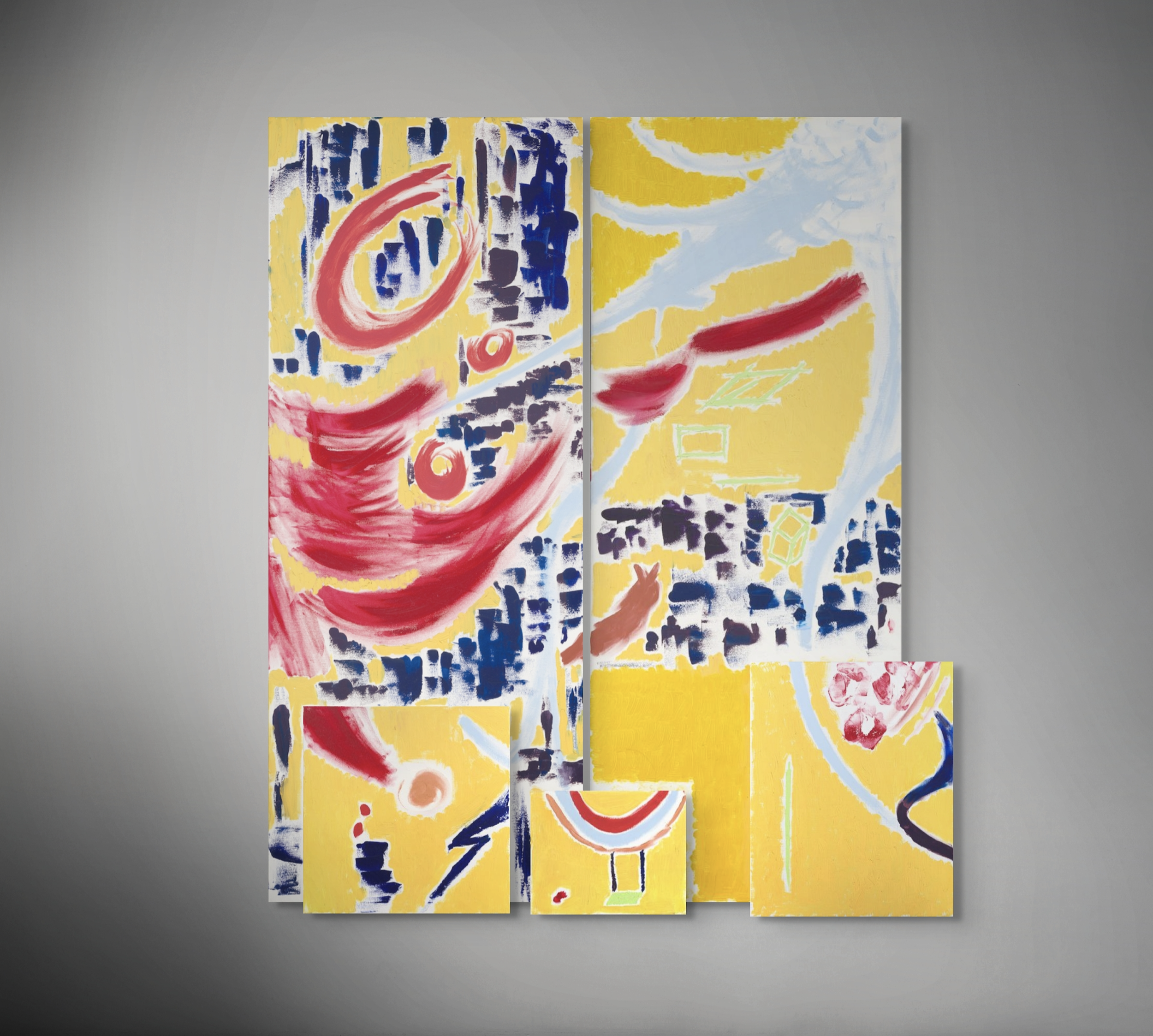
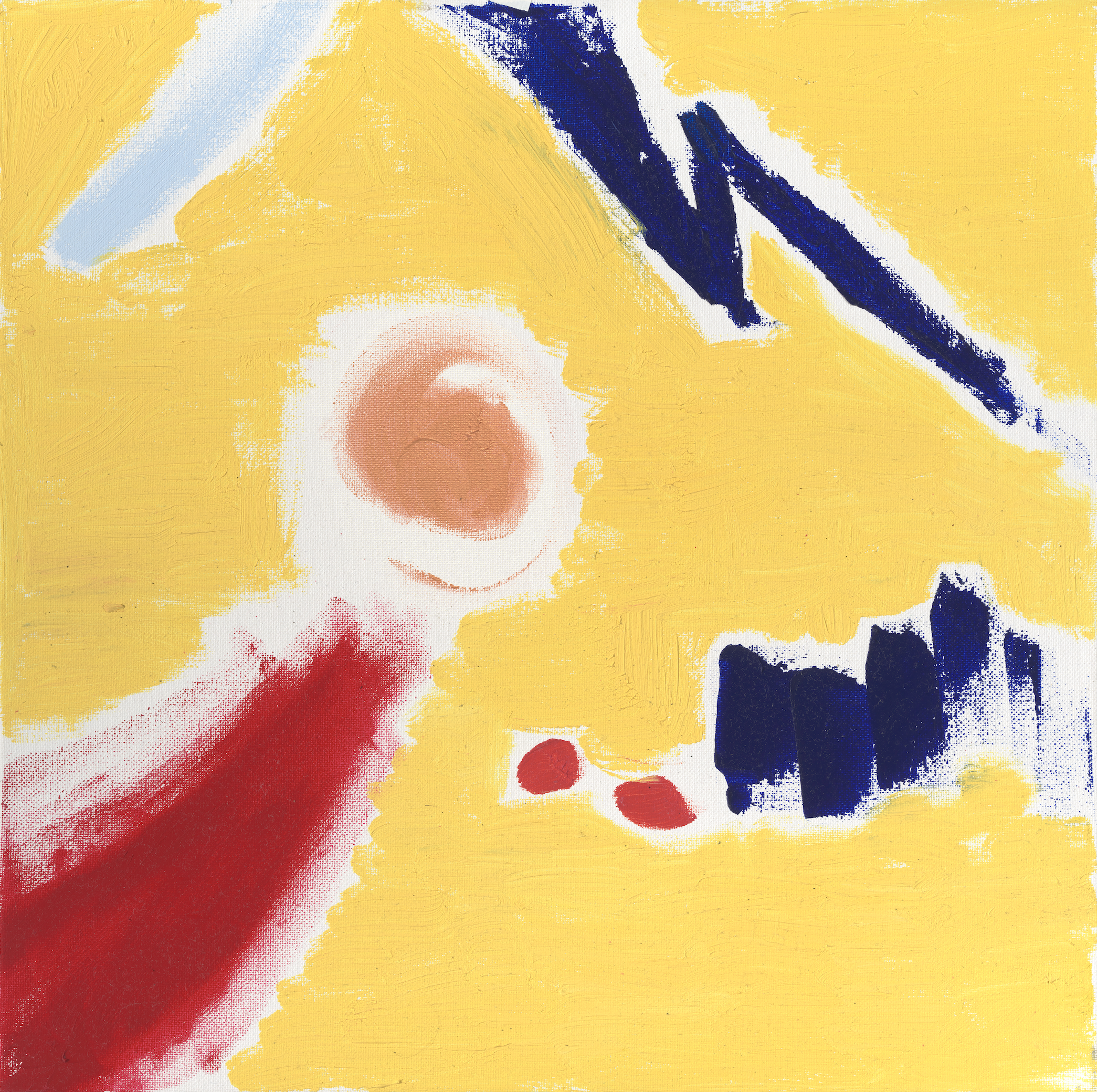
Here, four forces rotate together: passionate trauma, emotional nourishment, deep-blue staircases, and lightning. At the center, orange represents wisdom—the force that guides, integrates, and transforms these conflicting energies into a larger inner structure.
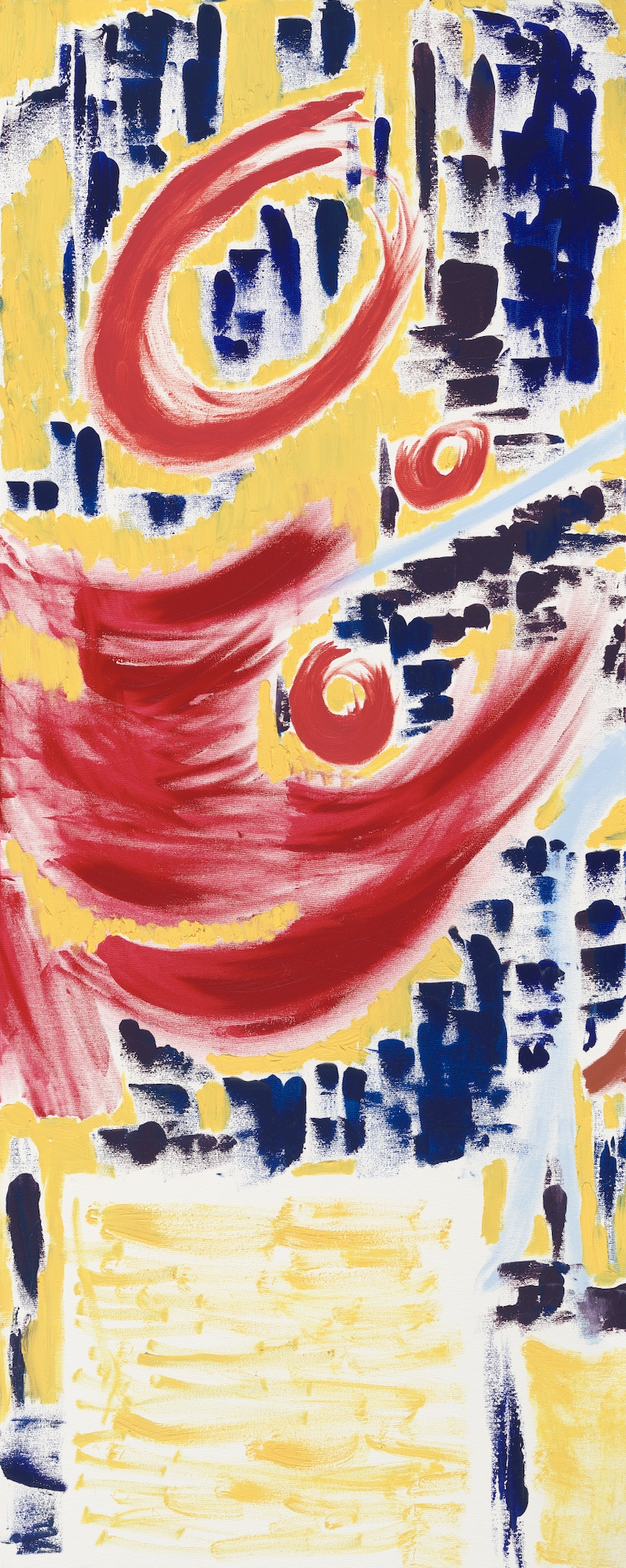
Crimson
Inspired by the classical line, “Anger rises to the brim of the helmet, leaning on the railing, the rain has just ceased,” this painting depicts a figure witnessing the collapse of the mind—and even the fall of a nation—with overwhelming anger and grief. Red represents rising emotional force, while blue symbolizes countless rational and architectural mental structures.
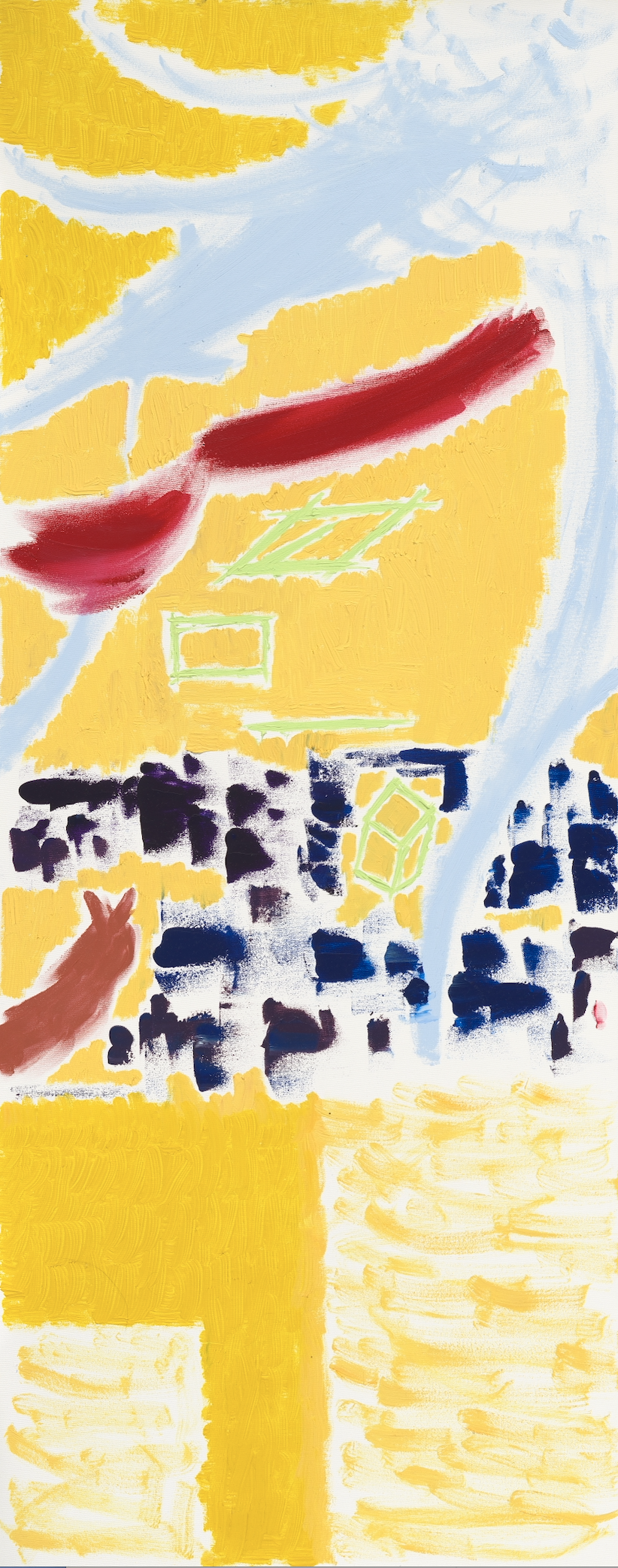
In this section, pale blue emotions nourish the psyche, while light green cognitive structures descend from the sky. The painting suggests the arrival of new forms of awareness and understanding after emotional collapse.
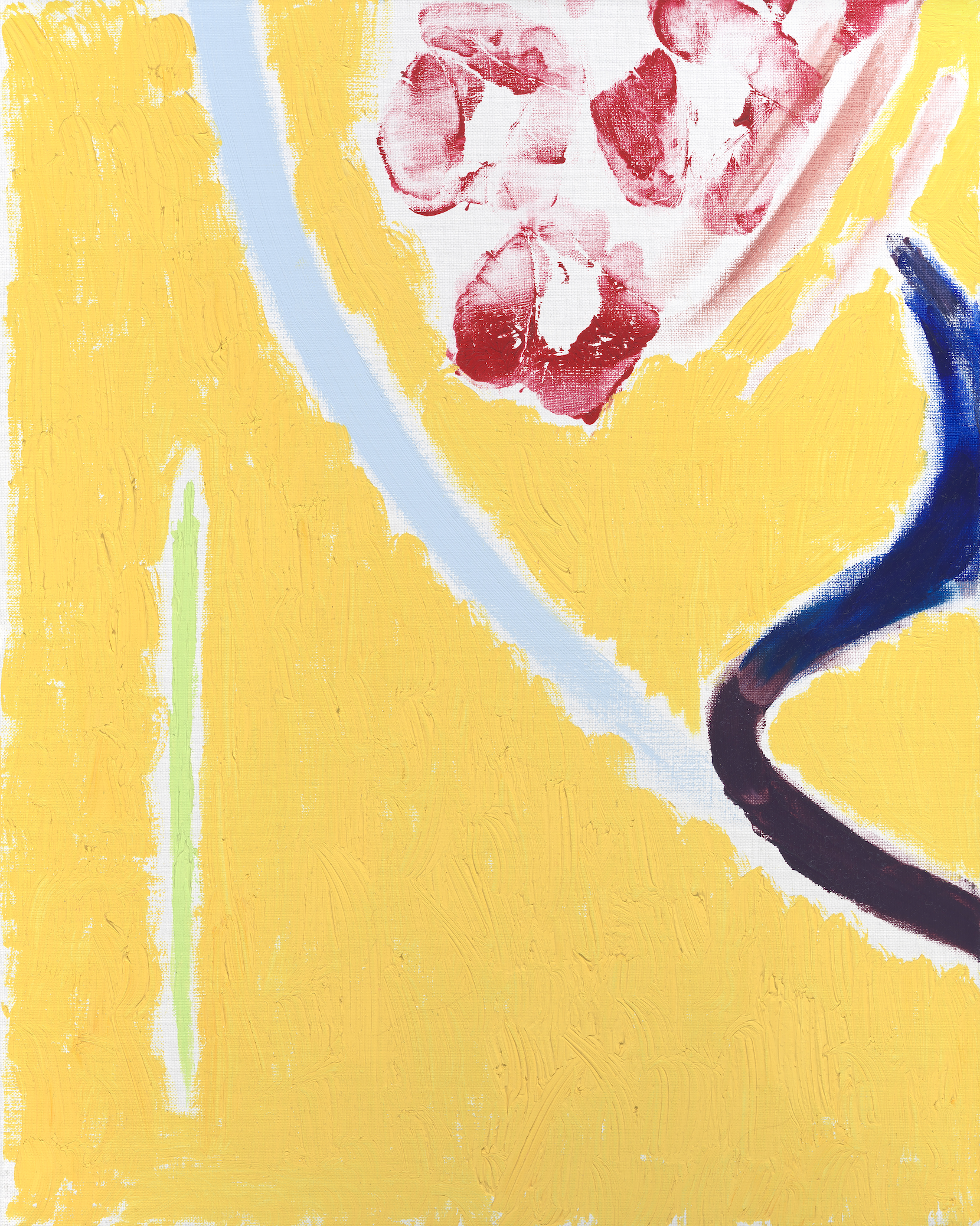
The lower right painting depicts observation and understanding between different forces. At the center of the overall composition is an arm making a “V” sign, which is also the back of a small fox. The fox represents wisdom at the center of the psyche—an awareness that integrates lived experience into a more layered and expansive perspective.
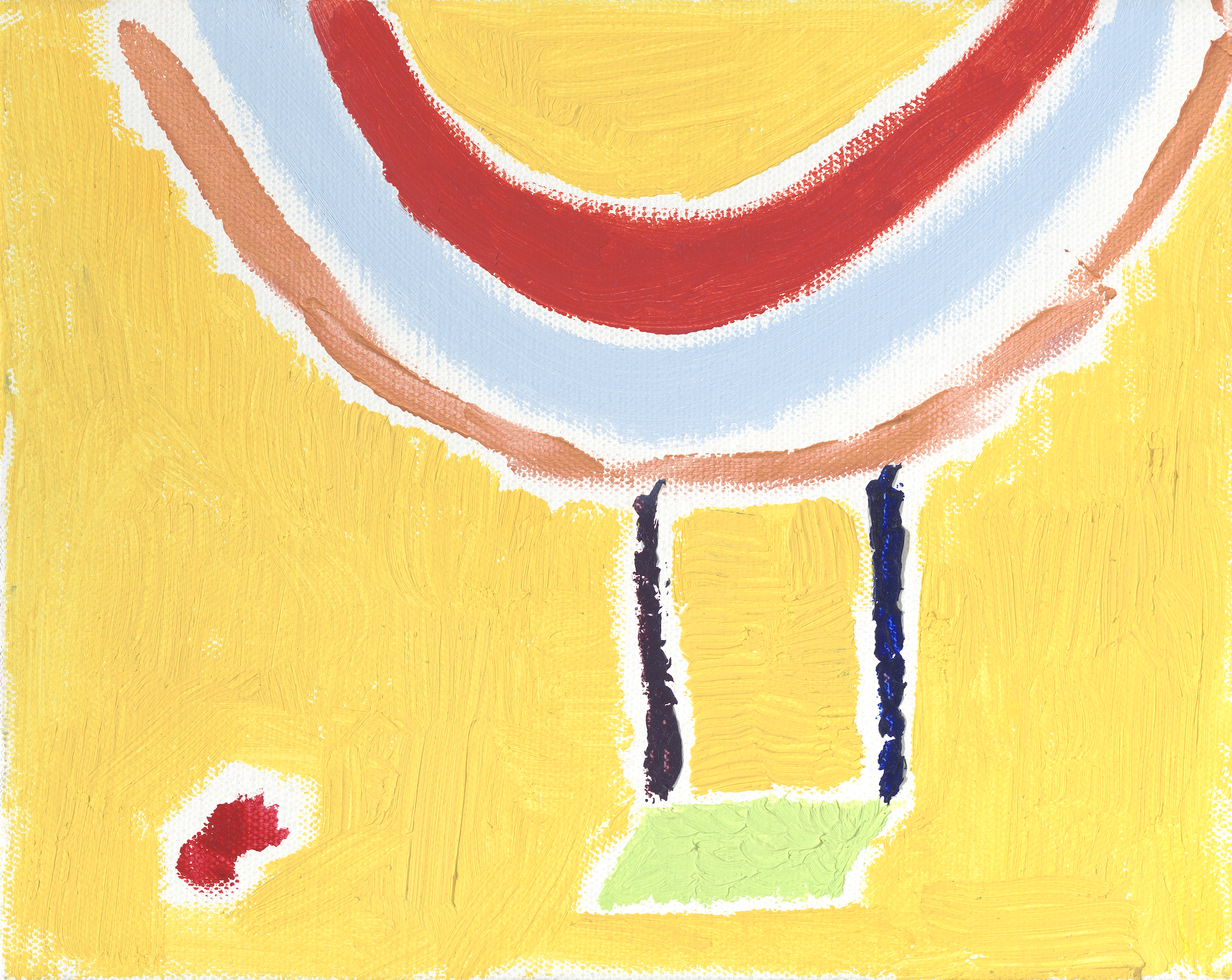
The middle lower section contains a swing, a rainbow, and a necklace—symbols of connection, fragility, and emotional movement. A small red dog faces vulnerability and longing, expressing the tender emotional core hidden beneath intense psychological experience.
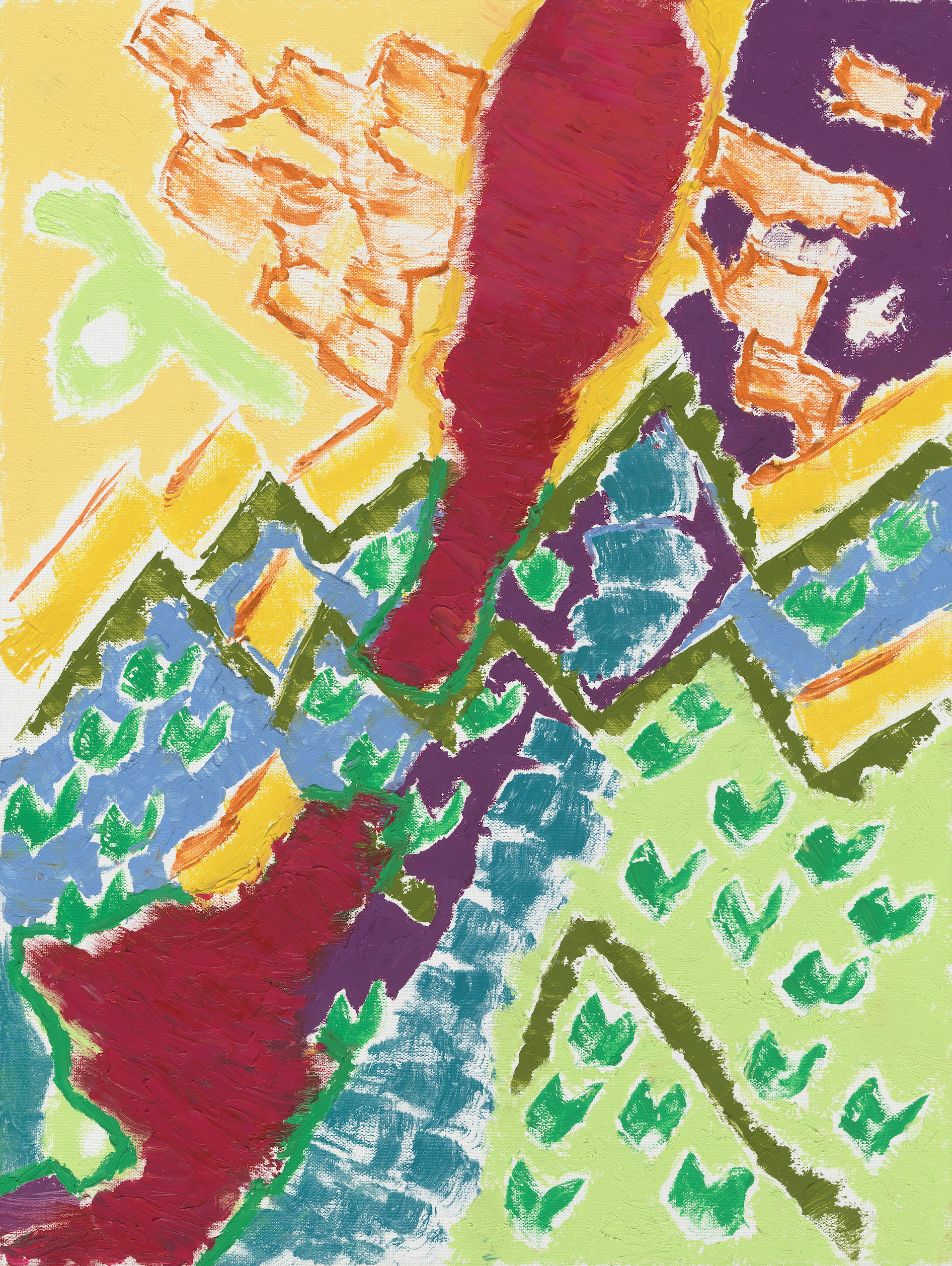
This painting is an emotional fantasy of Wang Ximeng’s A Thousand Miles of Rivers and Mountains, a fragmented deconstruction of the original landscape.
Within the composition, blue and green mountains, yellow forces, and red emotions form an inner psychological landscape of a single mind. It is not a depiction of external nature, but an internal topography of perception and affect.
The purple areas represent the cosmic background revealed after the landscape is torn apart. This layer exposes what lies behind the constructed world-image—an expansive, indifferent void.
Through a destructive yet nihilistic force, the work attempts to dissolve attachment to desire and loosen the rigidity of past fixations, using fragmentation as a method of psychological release rather than mere destruction.